Sunday, 30 October 2011

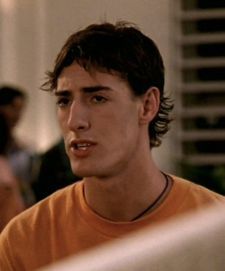
"'Hey everybody, it's Giles! With a chainsaw!'"

From the highs of season three, to the lows of season four. I won't lie to you guys, four is my least favourite season of Buffy. It has some fantastic episodes, but the weakest overall arc. Let's crack on with with whys and wherefores of the good, bad and ugly of season four...

SEASON FOUR: Originally Aired 1999-2000

The Good:

The only really good thing about this season is a few stand-out episodes. There are other strong elements - I like that we see alternatives to going to college, that there are no judgements about what the characters are choosing to do with their lives. It feels very real, that Xander is trying to find a job he likes and establish his own post-high-school identity; that Buffy initially struggles to fit in with the world of college whilst Willow was made for it; the way the group dynamic wobbles and suffers whilst the Scoobies adjust to these major life changes. It's something the viewers can identify with and it's handled well.


This season also shows Willow's growing fixation on magic and hints at elements of her personality that will make this a problem. After Oz leaves, Willow runs into someone from high school and all her old insecurities come flooding back. She had been leaning on the "I have a boyfriend in a band" thing to grant her a cache of coolness. Without that, Willow is left feeling vulnerable, like the same, dorky Willow saw was when we first met her. She wants to be seen as cool, powerful, different - a need that is probably exacerbated by her friendship with the Slayer. In 'Fear, Itself' Willow says to Buffy, "I'm not your side-kick" - but of course she is. Living in the Slayer's shadow can't be easy: it's something that Xander will discuss with Dawn in season seven, but in the continuity of the show this is something that Willow is just beginning to struggle with. She wants to become her own person, to start developing her adult identity. That, after all, is one of the things that college or university is about, establishing yourself as your own person, exploring yourself, trying out new things and finding out who you are. Willow starts strong: she's great in class and this is an environment where intelligence and hard work is rewarded rather than mocked and she has Oz to give her a bit of the cool factor. Once Oz leaves, however, Willow's new identity begins to crumble, just as Buffy is finding her feet in the world of college. Willow is obviously very insecure about this and feels that magic helps with that. Willow begins to use magic as a crutch: her new identity is "kick-ass powerful witch" and this increasing reliance will store up problems for the future, which come to a head in season six. I'll be discussing the problems with where it ends up in my season six review, but for now it's nicely handled and very subtle. 


To talk specifically about strong episodes, we have 'The Harsh Light of Day', 'Fear, Itself', 'Wild At Heart', 'Something Blue', 'Hush', 'A New Man', 'This Year's Girl', 'Who Are You', 'Superstar' and 'Restless'. Now, 'Restless' is so great and so complex that I am going to go ahead and give it a blog entry of its very own, so watch this space. As for the others, most of them are just great comedy episodes. 'The Harsh Light of Day' is both good and bad: most of what I enjoy about it is the return of Spike, but the episode suffers for just dealing literally with what season two dealt with figuratively, that being a man changing after sleeping with Buffy. 


'Fear, Itself' is much stronger: not only is it flat-out hilarious, but it deals with some great issues. There's the friction between Willow and Buffy that I've already mentioned; Xander's struggling to come to terms with the changes in their lives and how he feels left behind and left out since the others went to college; also Oz's fears about being a werewolf, something that hasn't much been touched on in the rest of the show. This will be important later.
 
Also there's Giles with a chainsaw
Also, there's Giles. With a chainsaw.
'Wild At Heart' continues dealing with the werewolf thing. It was hinted at during season three's 'Beauty And The Beasts', in which Oz is for a time suspected of killing a person, but it's always been largely swept under the carpet. In 'Wild At Heart' we get to see Oz's animal attraction to a female werewolf and the consequences of giving in to the animal id that the wolf side represents. 

'Something Blue' and 'A New Man' are, again, mostly comic relief, but 'Hush' is just stand out magnificent. It's the only Buffy episode to be nominated for an award and why it did not get the Emmy is beyond me. For a start, the villains of the piece are genuinely terrifying.

Serious nightmare material.
Everything about the episode is just excellent: there are moments of laugh-out-loud comedy (Giles' projector presentation being a highlight) balanced by horror, all with the most perfect musical score. It's a brilliant exploration of just how much we can say through body language and Lowri and I are fond of discussing just how much is said in this episode, without speaking a word. Willow finds out that Tara is a witch, whilst an attraction develops between them; Riley finds out that Buffy is more than human and Buffy discovers that Riley is part of the Initiative; and Anya realises that Xander does truly care for her. Everyone is listening to each other and it makes a great counter-balance to 'Once More, With Feeling' in season six, during which everyone is baring their hearts through song but no one actually pays attention to anyone else. We'll come back to that episode in a later post. 

Back to season four, there's the great two-part 'This Year's Girl' and 'Who Are You'. I'm sure you know by now how much I love Faith so to see her back in the series is a joy. It's also a very strong two-parter: the video message the Mayor left for Faith is genuinely poignant, whilst the body-swap twist is a great take on an old theme. Sarah Michelle Gellar acts her socks off here: seeing Faith-as-Buffy is very, very creepy and allows for some great insight into Faith's self-loathing and her desire to be Buffy whilst also wanting to defeat Buffy. Eliza Dushku does a solid Buffy impression, too. 

Finally, 'Superstar' - great because it is absolutely hysterical viewing and also because it manages to drive the plot forward in some vital ways. It's through Jonathan that we learn of Adam's only potential weak spot; and through Jonathan that Buffy and Riley managing to move past Riley's mis-step of sleeping with Faith-as-Buffy. It makes for some awesome television.

The Bad:
The most outstanding badness of this season is the Initiative and the whole damned season four story arc. Up until know, the show's internal logic has made sense: the Hellmouth has been allowed to flourish and get so many demonic problems because the Mayor wanted it that way and was using his power and influence to cover up the weird goings-on in Sunnydale. The rest of the world had few enough problems with demons and vampires that one Slayer at a time, supported by the work of the Council and the Watchers, was enough to prevent the world sliding into darkness. By suddenly saying that the US government know about demons and vampires, it undermines the logic of the show. If the police and the army know, why is there a need for a Slayer at all? The show struggles with depicting guns and weapons: you just can't have a show aimed at teenagers that is saying guns are great. I get that. However, why hunt vamps with a wooden stick when you could go out hunting with a flame-thrower? If the government know about the supernatural then they'd have the police out fighting the forces of darkness - with serious weaponry. Nest of vamps? No problem, drop a grenade. Hellmouth opening? No problem, drop lots of grenades. Yet that doesn't happen in the show: the Initiative go out patrolling with freaking tasers and nets, with the poor rationalisation that this is an experimental team trying to capture and experiment on demons.

Having the government as the bad guys is very old hat, too, and there's nothing fresh about this take on it. Men In Black handled it way better. Mixing in a bit of Frankenstein's monster just raises more glaring flaws - like how has Adam been created and built by just two scientists, without anyone else in the base finding out? In 'A New Man', Ethan Rayne tells Giles that demons have been talking, mentioning a "314" and being scared. If the Initiative aren't letting their captives go, how do any other demons know what's going on? And how do the demons, who have either never been to the base or only been there as captives in cages, know about room 314 whilst Riley, who works there, doesn't notice it until Buffy asks him about it? Oh and speaking of the base, why have it under the college? Why not at the pre-existing army base? Or another, totally separate, location? Why spend a fortune making something covert and creating a fake college dorm, getting your soldiers in as fake students, when you could just have a base that was restricted access? It's stupid.

There's also Spike. Now, I love Spike - but it's total fan service having him in this series. Joss loved writing the character, James Marsters loved playing the character and the fans loved watching the character, so they found a way to wedge him in as a regular. And much as I want it to, it just does not work. Watching this season with Boyfriend really brought home just how badly it's done; Boyfriend was slating Spike's role in this season and I was trying to defend it...but couldn't. Putting a chip in Spike's head is ridiculous, I won't lie to you. For a start: how did the Initiative sneak up on him in the first place? Spike is over a hundred years old; a hundred years of being a vampire, a predator, a hunter - and a group of soldiers can surprise him? It totally demeans the character. As does him turning to the Scooby Gang for help after his escape - why does he do that? And why would they help him?! I get that Buffy wouldn't stake him, because killing someone who is now helpless isn't something she would do - but why would they take him in? Why would they get blood for him? Why can't he figure out how to buy blood from the butchers himself?! 

How much Spike can and can't hurt people also varies wildly: during his escape from the Initiative base, Spike his able to punch people and throw them around; later in the series, he can't event think of hurting people without his chip going off. On which note: how is the chip meant to work in the first place? How does it distinguish between demon and human? How does it know when Spike is intending violence? And as the brain lacks nerves, how does it even cause him pain? The whole concept is just stupid and, much as I love having Spike's sarcasm and sneering contempt as a regular feature of the show, it doesn't work. Boyfriend says he lost all respect for the character and he's not wrong to do so.


Also, in 'The Harsh Light of Day', why the big bad bloody hell does Spike tell Buffy what the Gem of Amarra is and thereby reveal how he can be defeated?! Idiot.

There are also some fundamental problems with Faith's reappearance. She's been in a coma since graduation day - yet when she awakens she has no problems with muscle wastage, no brain damage, nothing. She can just get right up and start throwing punches. Now I get that within the time constraints of the show it would be difficult to realistically depict recovery from a coma, but even allowing for Slayer healing, having zero negative consequences is a bridge too far.

Not your average recovery time.
There are also some terrible episodes to balance out the good ones. I'll talk more about the worst of the bunch, but dishonourable mention goes to 'Pangs', thanks to the whole Native American Indian angle. Clearly the show doesn't know whether to just cold have Indians as the bad guys, or whether to make them sympathetic. The script dithers over this and the plot of this already weak episode suffers further for it. Also, Xander gets syphilis - syphilis - and "all the diseases" that European settlers brought to the Native Indians, which must surely include small pox, yet instead of causing an epidemic this is apparently meant to be high comedy that just sort of goes away.

Giles gets a tough ride in this season, too. He's unemployed and totally lacking in direction and it does demean him. It's as though the writers had no idea what to do with the character this season. It does lead to some great lines like, "She called me an absent male role model" ('A New Man') but overall it just doesn't work.

Boyfriend also criticises 'Superstar' for having Buffy be feeble and ineffective when Jonathan is awesome - but considering this is the result of a magic spell which means Jonathan starred in The Matrix, I'm willing to let it slide. Boyfriend's right, though; there's no reason why Jonathan being super-awesome would mean no one would take Buffy seriously.

The Ugly:
Watch out, kids! There's something on campus worse than vampires - the horror of that demon drink! In 'Beer Bad' we see the terrible, terrible consequences of that most awful of sins - drinking beer. Buffy and a bunch of frat boys turn into Neanderthals thanks to some cursed beer or something. It's bullshit and insulting to the audience - I understand that you don't want to show the characters regularly necking vodka with no ill effects, because younger viewers could get the wrong idea from that. But to go with a preachy episode like 'Beer Bad' is ridiculous, especially considering that in the very next season the characters are all drinking and it's fine. Then we have the travesty that is 'Where The Wild Things Are', which shows the total horror of enjoying sex with your consenting partner. It seems like the episode wants to explore, through analogy, how people can lose themselves in a new relationship and allow that initial lust and sexual desire to block out everything else in your life - but it just comes across as stupid. It's pretty much the only episode of Buffy I feel embarrassed to watch.

For me, though, the most awful thing about this season is the way the Scoobies, including Giles, react to Oz leaving Willow. Willow goes through utter horror: her boyfriend cheats on her, finding another woman more sexually magnetic than Willow; the woman that Oz cheated with then tries to kill Willow, only for Oz to tear her throat out - and then Oz, having fully changed into a wolf, nearly kills Willow as well. And how do Willow's friends support her during this difficult time? They get angry with her.

Yep, the same gang that has to listen to Buffy's endless whining about her doomed affair with Angel can't bear to listen to Willow's suffering. In 'Something Blue' we get another "drinking is evil!" moral diatribe because Willow is trying to have a few beers and dance at the Bronze to get over her pain; and throughout the episode, no one seems to have time for her. Yes, Willow is wallowing in her pain - but my god does she ever have a right to. Instead of consoling her, making time for her, or at least telling Willow "I hear your pain, let me just go patrolling then I'll come back and spend time with you", Buffy just wants her to shut up and get over it. Instead of the endless sympathy Buffy gets, we get the following exchange about Willow: 

Xander: Something about Willow and her grief-y poor-me mood swings. So, so tired of it.


ANYA: You mean I don't have to be nice to her anymore?


BUFFY: We're all tired of it [...]

It's awful. 

There's also Sarah Michelle Gellar, who I'm putting into the "ugly" category because of her physique. She is starved thin and looks totally unhealthy.

Also an horrifically clear example of slim vs anorexic.
I know that the producers of the show aren't exactly in control of how their actors look, but damn. The change is so profound and so noticeably awful that I felt it really needed a mention.


Overall I'd say this is more of a "bad" season than an "ugly" one, but that's the best I can say of it. Next time, an in depth analysis of 'Restless'!


Saturday, 24 September 2011

The Ultimate Buffy Drinking Game

As I'm nearly halfway through my Good, Bad and Ugly of Buffy the Vampire Slayer, thought I'd bring you this quick interlude from me, Flowri and PJ Montgomery:


The Ultimate Buffy Drinking Game!

1. Credit Shot - down one shot of alcohol. 
You know all the clips from episodes that feature in the opening credits of every episode? Any time you see the scene those clips are actually taken from, have a drink.


2. Every time you see a character's bra strap - take one shot if it's a female character, two for a male character*.


3. Every time you see a vampire go game-face - have a drink.


4. Every time a vampire gets dusted - have a drink.


5. Every time a non-stake is used to dust a vampire - have a drink. 
Pencils, table-legs, cymbals - anything and everything that is used to slay vamps, if you see it on-screen, you take a shot.


6. Every bad accent! 
Angel's bad fake-Irish, Kendra's awful...I want to say Jamiacan? Basically, if there's an actor on-screen trying (and failing) to deliver an accent not their own, take a drink. One shot per accent, don't try and drink for the whole time they're speaking. This is a game, not a kamikaze challenge.


7. Whedon crossover actors - one shot per show they've been in, first on-screen appearance only. 
Felicia Day, Nathan Fillion...those actors who have appeared in Joss-written shows other than Buffy.


8. Every time non-English is spoken - one shot per language. 
If a character is speaking a demon language, the flashback scenes where Anya/Aud is speaking (fake) Swedish...If it ain't English, take a drink.


9. Giles cleans his glasses - take a shot every time this happens.


10. The British are coming! 
Bit of an obscure way to explain it, but we just loved this line. What this means is, any time characters get away with swearing on-screen by using British slang ("wanker" and "bollocks" being popular choices) then you take a shot.


And that's it! Designed for playing whilst watching several episodes in a row - we thought of including a rule where any time Buffy is dressed like a total slut, you take a drink, but then we realised we didn't want to drink ourselves into a coma after one episode. Enjoy!


* Yep, you do see male characters wearing bras in certain episodes...

Wednesday, 21 September 2011

'Your logic does not resemble our Earth logic.'

Welcome, one and all, to my love-letter to Buffy the Vampire Slayer, season three. It should come as no surprise to you by now that a lot of thought has gone into this post. Not only did Flowri re-join me for this, but PJ Montgomery was told invited to join us. Our triple-geek-powers have also been combined to bring you the Ultimate Buffy Drinking Game*, but that’s a story for another day. For now, let’s crack on with season three!

SEASON THREE: Originally Aired 1998-99

The Good:

This is probably the season that all three of us love best. It’s not perfect, but it is bloody fantastic. There’s an incredibly strong story-arc to it: we finally get to see the Mayor of Sunnydale, who has been built up as a villain for the past two years of the show; there are some stand-out brilliant episodes; future plot arcs are neatly hinted at, whilst past ones wrapped up; and then there’s Faith.


Ah, Faith. So sexy even hetero females like Flowri and I would totally go gay for her. PJ had his own thoughts about Faith. Private thoughts. What he would divulge was that women with medieval weaponry are totally hot.

This one is for PJ

Live and learn, ladies.

But all commentary on Eliza Dushku’s insane levels of sexiness aside, Faith is a brilliant character – she’s so good that she even makes up for how godawful Kendra was last season.

One thing that Kendra was good for, was showing the alternative to Buffy’s version of the Slayer. Flowri and I have spoken (at length) about how Kendra represents the regular-model Slayer: she’s cracked the books, obeyed her Watcher from her earliest memories, is all focus and discipline, no distractions allowed, whilst Buffy has friends, family, and an attempt at a social life. Spike makes an excellent point about the consequence of this in season five’s ‘Fool For Love’, that Buffy’s friends and family are what tie her to this world so she doesn’t get lost in the Slayer identity – but we’ll come to that in a later review. Shifting focus back to season three and we have Faith – the Slayer who has lost herself in the slaying. She revels in the hunt, the fight, the kill; it’s all there is to her. Faith doesn’t go to school, she doesn’t have a job, the only time we see her off-duty is when she’s trying to unwind after a hunt by cruising for guys, and she thinks she’s above the law and that normal human rules don’t apply to her. In Kendra we get the goody-two-shoes and in Faith we have your typical bad girl. Buffy represents more of a middle ground; every season of the show deals, to greater or lesser extent, with Buffy coming to terms with herself: being the Slayer, a daughter, a friend, a lover, a student, an employee – trying to find balance between different aspects of her identity.


Whilst Buffy was an influence on Kendra in the previous season, helping Kendra tap into and utilise her emotions and, well, lighten up a little, in contrast it is Faith who is the more powerful influence on Buffy – at least at first. Although initially jealous of Faith, jealous of having to share the identity of The Slayer, as the season progresses Buffy is increasingly tempted by Faith’s modus operandi and by ‘Bad Girls’ Buffy fully embraces Faith’s philosophy of “Want. Take. Have.” However, Faith crosses a line that Buffy isn’t prepared to follow her over: Faith kills a human. Whilst it is accidental, Faith’s lack of remorse is not: instead of turning to Buffy and/or Giles for help and atoning for her crime, Faith shrugs it off and embraces the dark side. Faith enters the employ of Mayor Richard Wilkins III himself – one of the greatest characters ever.

The Mayor as Big Bad was alluded to during the past two seasons and damn does it pay off. Played to perfection by Harry Groener, the Mayor is charming, genial; like a 1950s grandfather, all twinkles in the eye and offers of cookies – but beneath that veneer is a soulless monster. He’s a magnificent bad guy and serves as a wonderful parallel to Giles. Despite Giles being appointed by the Council to serve was Watcher to both Buffy and Faith (‘Faith, Hope and Trick’) we’re never in any doubt as to who is Giles’ favourite. With Buffy’s deadbeat dad less and less in the picture, Giles is clearly her surrogate father and a lovely father-figure to the Scooby Gang as a whole. Faith, however, is always a bit of an outsider to the group: she’s not invited to every meeting, she’s on her own a lot of the time, she doesn’t appear in every episode – she’s the side-kick and Buffy is the hero. And it pisses Faith off big time. A lot of her rivalry with Buffy comes from this tension: the fact that there are two Slayers when there’s only supposed to be one per generation, and Buffy got there first. Even when Wesley arrives on the scene, after Giles gets fired (‘Helpless’), it’s Buffy who gets most of his attention – although a large part of that is because Faith has already committed to her Bad Girl role and so can’t stick around to hear instructions the way Buffy can – so it’s little wonder that Faith falls so hard for the fatherly spiel the Mayor feeds her.

It’s never confirmed in the show whether the Mayor is just using Faith or not. In the Season 8 comics Faith says that others have told her she was being used by him, but all she ever felt was loved. It’s also a common theme with Buffy villains that, however evil their motives, they tend to speak the truth. Sometimes hard, horrible truths that the good guys don’t want to hear, but truths nonetheless. So it is very possible that Mayor Wilkins does love Faith as a surrogate daughter: it certainly looks that way, especially considering the evidence. Buffy manages to use this against the Mayor in ‘Graduation Day: Part Two’; she shows him the knife she used to stab Faith with and it hurts him, this reminder of Faith’s near-death status. He also visits Faith in the hospital (before he turns into a giant snake, obv) and is distressed to see her injured; and as we see in season four, he puts systems in place to try and take care of Faith in the event she survives and he doesn’t. Wilkins is to Faith what Giles is to Buffy; they’re two sides of the same coin. It’s also awesome to see the Mayor being, well, a mayor, in episodes like ‘Gingerbread’ – and his ‘To Do’ list in ‘Bad Girls’ is just priceless.


Now this is meant to be a write-up of season three, not just totally devoted to Faith, so I’ll say one last thing and then move on: The fight. Between Buffy and Faith. ‘Graduation Day: Part One’. Best. Fight scene. Ever. Oh, man, I could watch that scene on repeat for the rest of time. FANTASTIC.


Right, so, the rest of the season.

Angel is much stronger in this season – as PJ pointed out, you can really see him start to do things on his own, stepping up and doing the whole private investigator thing that will be his gig in the spin-off series Angel that started after this. There are some great scenes with Angel, too; Flowri noted how in ‘Enemies’, when Angel has to pretend to have lost his soul, it becomes clear that Angelus isn’t the separate entity that Angel wishes him to be. Angel is always talking about Angelus as a different being, removed from soul-having Angel; he doesn’t talk much about what he remembers doing when he’s soulless and everything from his mannerisms to his use of nicknames for people changes depending on whether he’s in possession of a soul or not. However, in ‘Enemies’ he fakes being Angelus far too well – he knows exactly how to play it, which he wouldn’t do if being Angelus was this vague, fuzzy, “I can barely remember it” experience. Angel tries to pass off being soulless as kind of like being profoundly drunk and not being able to fully remember your words or actions the next day – instead, it becomes obvious here that the same mind, the same consciousness and memory, is at work in both Angel and Angelus: the soul just gives him a moral compass that Angelus lacks.

Willow’s use of magic is also developed in this season; in ‘Faith, Hope and Trick’ Giles is pretending he needs to do a spell, as a pretext for getting Buffy to talk about her experience of sending Angel to hell, and when Willow offers to help it’s clear that Giles is uncomfortable about her continued exploration of witchcraft. Willow’s own abilities are her downfall: she has great power and the kind of studious, focused mind that enable her to progress quickly through magic – but as she’s moving so fast, she isn’t learning the responsibility that should come with it. It’s like Ian Malcolm says:

“…it didn't require any discipline to attain it. You read what others had done, and you took the next step. You didn't earn the knowledge for yourselves, so you don't take any responsibility for it. You stood on the shoulders of geniuses to accomplish something as fast as you could”
Jurassic Park


We’ll talk more about this in the season six review, but for now it’s a great little insight into how the plots are developing through the show.

Xander really improves in this season, too. After being mostly the comic relief in the previous two seasons, in ‘The Zeppo’ in particular he really comes into his own and becomes a character that Flowri and I do not loathe. He has moments of total-jerk-ness, which I’ll cover in The Bad and The Ugly (quelle surprise), but there are times when he’s great – stand-out Good Guy moment being buying the dress for Cordelia. Heart: melted.

On a similar note, I love how we’re already getting hints about Dawn’s arrival, like Faith telling Buffy she’s “all dressed up in big sister’s clothes” (‘Graduation Day: Part One’) and the references to Dawn in the dream-sequence in ‘Graduation Day: Part Two’.

I am also a massive fan of ‘Lover’s Walk’, for obvious reasons.


Spike and hilarity, all I ask for from a TV show
‘Beauty and the Beasts’ has a great plot, too: whilst it may be a touch heavy-handed, I love how the bad guy in this episode isn’t an actual demon, it’s just a normal guy**. It’s a great way to cover the issue of domestic violence through the veil of monsters that the show employs. This is also the season of lighter episodes like ‘Band Candy’ and ‘Earshot’, which I can pretty much watch on repeat. “Someplace that’s else” has permanently entered my vocabulary thanks to ‘Band Candy’ – and every single time I watch Buffy delivery the line “Unless you’re too busy having sex with my mother” I laugh and laugh and laugh. Plus: naughty teen Giles.


The more I blog, the more I realise just how big a crush I have on Giles


Yeah you would


You are welcome.
Basically, the three of us pretty much established that season three is all killer, no filler. There are some less-than-great episodes, which I’ll come to next, but overall it’s damn near perfect.


The Bad:

Most of the bad in this season hinges on Xander. Again. There is also awesome-Xander, as I said, but there’s a lot of horrible-Xander, too. We were all irritated by the Willow-and-Xander romance subplot. For a start, it is so damn frustrating that every TV show ever is apparently convinced that boys and girls can’t be friends – despite the real-life evidence and experience of me and most of my friends and most of our friends’ friends. Pretty much everyone I know has friends of the opposite sex and it’s disappointing that Joss falls into the stereotype-trap and has Willow and Xander not only get into a romantic relationship, but cheat on their respective partners to do so. It’s a real slap in the face to Oz (lovely lovely Oz) and to Cordelia – especially given how Cordelia is speaking about Xander in ‘Homecoming’. She seemed to be really growing as a person and falling in love with Xander, and his cheating just knocks Cordy back into being this catty, bitchy Mean Girl again.


Boyfriend hates how Cordy is portrayed in this series and thinks it’s bad writing, that she becomes a total unreasoning, unlikeable bitch: Flowri and I see it differently. Cordy has tried being (a bit) nicer, tried playing along with this group of social outcasts, and she gets deeply wounded for her efforts. Xander and Willow are obviously to blame for their cheating; but Cordelia also sees Buffy as being partially to blame (‘The Wish’) because her hanging with Xander made him “marginally cooler” and also put him and Cordy together in all these tense, high-drama situations that made him more sexually appealing. His cheating, his rejection of her, pushes Cordelia back into being her old self – she’s tried on a different identity by being one of the Scooby Gang, and it didn’t work out, so she’s goes back to the identity she knew best.


Aside from all of this, the Willow/Xander plot doesn’t feel very real; it’s not as though the actors have this searing sexual chemistry that sells the unbelievable plot, either. It all feels half-arsed which, combined with said lack of chemistry, means it doesn’t sell the idea that Willow would cheat on Oz (lovely lovely Oz) or that Xander would give up this great relationship that he’d been building with Cordelia. The worst plot of the season, really.


There are some bad episodes, too: ‘Anne’, ‘Dead Man’s Party’, ‘Amends’ and ‘The Prom’. All do drive the plot forward (seriously: no filler) but not in especially great ways. ‘Anne’ is mediocre; ‘Dead Man’s Party’ may have one of the single greatest Giles-lines on Earth*** but overall has the characters generally behaving as unlikeable dicks; ‘Amends’ has The First, who is just stupid (I try and defend it as a villain when Boyfriend started criticizing the idea, but deep down I know that [for once] he is right and The First is nonsensical); and ‘The Prom’ is a bit twee. But so help me I get moved despite myself when Jonathan presents Buffy with the Class Protector award.

Moving swiftly on…

There are also some gaping logic fails: the one that stands out being when Willow uses a tranquilizer dart on VampWillow in ‘Dopplegangland’. Seriously? A tranquilizer? On a vampire?!
How the hell would the drug work? How would it circulate through something that has no circulation?!! It’s like Spike suffocating Drusilla in ‘Becoming: Part Two’ – it makes no damn sense within the internal logic of the show and is really something that should have been picked up on and edited out.

There’s also the first few appearances of Angel. For contractual he-has-to-appear-in-every-episode-because-he’s-a-credited-character reasons, Angel is featured in episodes from the beginning of the season. The problem is that Angel is in a hell-dimension until ‘Beauty and the Beasts’, so can’t exactly feature as per usual. It’s clear that he was just wedged in for the sake of it, with dream-sequences aplenty, and it feels like lazy writing. Although there are a few good episodes of Angel and some great appearances of the character in this season, overall I think it would have been way better if Angel had stayed dead after Buffy sent him to hell at the end of season two. I think the writers agree with me, too: Buffy whinging “I killed Angel” is a recurring motif of the show, conveniently overlooking the fact that he came back. It’s a little bit more traumatic and dramatic if he’d actually stayed killed, after all.


The Ugly:

We genuinely struggled to think of any Ugly from this series, but as ever we fall back on that ol’ favourite: Xander.

He has highs and lows in this season: the low being sending Faith to kill Angel when Xander discovers that Angel is back from Hell (‘Revelations’). Again, this is Xander acting out of purely selfish, nasty reasons: he still has a thing for Buffy, is still jealous of Angel, and so he tries to have someone executed. It’s also a pretty shitty way to treat Faith – Xander sends her out like his own personal attack-dog. Yes, he goes with her, but he’s not fooling anyone: there’s sod-all Xander can do against Angel and he knows it. He knows it’s Faith who will be in the firing-line and if he genuinely believes that it’s soulless Angelus who is back, then he’s sending Faith to face possible death just so he can have his rival taken permanently out of the picture.

Plus, after the fall-out from being caught cheating with Willow, whilst Willow shows genuine remorse and makes extreme efforts to prove to Oz that she’s sorry, has changed, and is worth taking the chance on rebuilding trust with, Xander seems reluctant to accept any blame. It’s Cordelia who gets shoved out of the Scooby Gang (which we’ll see again with Anya in season six – seriously, Xander, shitty guy) – no damn wonder she gets her vengeance on in ‘The Wish’ – whilst Xander seems to get away scot-free. He even continues dishing out the verbal barbs to Cordy every time they meet, all because she wouldn’t accept his apology. He comes across, as ever, as mean, petty and low.


So that’s a wrap for season three, folks! Next time, the dizzy highs and crushing lows of season four.

Gasp! as Buffy drinks beer!

Tremble! as the government are involved in a conspiracy!

Thrill! as Faith reappears on scene…!


* I’ll link it here as soon as it’s written up.

**‘Great. Now I’m going to be stuck with serious thoughts all day.’
***‘ “Look at my mask! Isn’t it pretty! It raises the dead!” Americans.’

Sunday, 21 August 2011

'Which means we're still the undead's favourite party town.'

Continuing with my über-geeky mission to review every season of Buffy the Vampire Slayer, we now get to season 2. After reading my first review, my friend Flowri demanded asked to be involved in the writing of future Buffy reviews and considering she is also an eminent Buffologist, I was happy to have her join me in the crafting of this post.

So this, my friends, is the result of two of the finest Buffy-orientated minds on the Internet at work. BEHOLD OUR GLORY*.


SEASON TWO: Originally Aired 1997-98

The Good:


Season 2 is altogether better crafted: for a start, there is a cohesive season arc that is far more intricate and well written than “the Master wants to escape” plot of season 1. There are also increased production values – there was a higher budget available for this season and it really shows. True, there’s still some sketchy CGI, but we’ll get to that. Apart from the odd monster-they-couldn’t-afford-to-show-right, this season looks better and is more tightly plotted. I think of this as the “convert” season; if you watch this season and still don’t like Buffy then the show really isn’t for you. That’s not to say I necessarily think season 2 is the best (although it is one of my favourites), but it contains some of the strongest episodes, some of the most resonant messages and some of the most entertaining and generally awesome characters of the show. If you reach the end of season 2 and still think, “Meh, I can live without this” then I don’t think there are any other seasons that will win you over.

Flowri and I are both in agreement that the plot of this season is just masterful. Call us sadists, but we love it. For the uninitiated, or for those poor of memory, this is the season in which Buffy and Angel consummate their luuurve, make with the sexing, and this moment of perfect happiness causes Angel to lose his soul and turn evil. It’s not a very subtle analogy, true – girl sleeps with boy, boy changes and gets mean – but it is handled so deftly and in a fairly original way. The performances are what really sell it: David Boreanaz’s acting has vastly improved in this season and you can see he really relishes playing the bad guy.


He also gets, like, a thousand times sexier

It’s a universal theme, something nearly all women have experienced at some point in their lives and so this really resonates with the audience. We really feel for Buffy and Sarah Michelle Gellar’s acting is, quite simply, brilliant. Buffy’s heartbreak, her guilt and pain, are palpable. It’s a brilliant story-arc – especially as it’s the plot you don’t see coming.

Season 2 initially seems to be all about the new bad guys, Spike and Drusilla (believe me when I say we will come back to them, at length) – a replay of season 1’s Buffy versus the Master. Instead we get the sucker-punch of Angel’s transformation and this season becomes about growing up, becoming an adult and dealing with the consequences of your decisions (as reflected through the episode titles: “What’s My Line”, “Innocence”, “Phases”, “Becoming”... You get the picture). Buffy works best when the show deals with real-life issues through monster-metaphors**, and as that’s the focus of this season it’s another reason why this story-arc is Buffy at its best.

This plot also shows us the true wonder of Giles: best father-figure ever. His speech to Buffy, after the reveal of how Angel came to lose his soul, is so moving and so loving. It’s exactly what Buffy needs to hear and exactly what every girl would want to hear if she were in a similar situation. Buffy expresses her feelings of guilt and responsibility to Giles, and what he says in reply is:

“Do you want me to wag my finger at you and tell you that you acted rashly? You did. And I can. I know that you loved him. And, he ... he's proven more than once that he loved you. You couldn't have known what would happen. The coming months are, are going to be hard, I suspect on all of us. But if it's guilt you're looking for, Buffy, I'm not your man. All you will get from me is my support. And my respect.” (“Innocence”)

Every time I watch that scene, I simultaneously get a tear in my eye and the urge to just stand up and applaud Giles. It’s fantastic and heart-warming.

Also he is very sexually attractive.

How great a father-figure*** Giles is to Buffy is also neatly contrasted by just how poor a father-figure Buffy’s actual dad is. Hank Summers is barely present in this season; we see him in “When She Was Bad”, briefly, during which time he tells Joyce just how little he understands Buffy. Hank has allowed Buffy to purchase lots of clothes and shoes (maybe that’s where she gets all her stuff from and why the Dungarees of Doom are the only things she wears more than once, for the entire duration of the show). When her birthday rolls around, Buffy tells her friends and Angel how she and Hank have plans, how they always go to the ice show together and it’s a really meaningful event. Surprise, surprise, Hank doesn’t show. He sends flowers and a card instead – trying to buy his way into Buffy’s affections again. Hank doesn’t get Buffy and doesn’t get how to connect to her, how to be her father now that she’s growing up and now that he’s divorced from her mother. Giles, on the other hand, for all his despairing of Buffy’s unconventional slaying, does understand her. And not only does he understand her, he accepts her.

The issue of step fathers is also handled pretty well in the episode “Ted”. Buffy’s jealousy, her struggle to accept this new person in her mother’s life, the friction between potential-step-father and potential-step-daughter all feels real and believable. This episode also features under “The Bad”, however, so it’s a bit of a double-edged sword.

Moving on from parental roles, Flowri also highlighted her enjoyment of the “new” monsters introduced in this season. Season 1 was much more about the vampires, whilst 2 broadens its horizons. Other friends of mine have complained to me in the past about this: they point out that Buffy is a vampire slayer, so to have her tackling all these other monsters feels a bit like an X-Files knock-off. I lean more to Flowri’s feelings on the matter: if Buffy was just fighting vampires week in, week out, the show would inevitably get stale. More monsters mean more variety; it also opens situations up to being analogous for everyday teen issues. With monster-fighting.

Onto the best monsters of them all: Spike and Drusilla.

You have NO IDEA how much fanfic I wrote about these guys back in the day
Ahh, Spike and Dru. It’s important to note here that, despite being soulless evil psychopaths, theirs is possibly the healthiest relationship in the show’s history. As the Judge says, they share jealousy and affection; Spike is devoted to Drusilla’s well-being, is tender towards her, careful of her feelings and they clearly share passion. True, the arrival of Angelus throws a spanner in the works (and I love how the series Angel fills out the backstory of this), but then Spike goes to surprising lengths to win Dru back – he teams up with the Slayer, and we all know where that leads, Spuffy fan-service I’m looking at you. Ahem, anyway.

The love that Spike and Drusilla share humanizes them and makes them sympathetic. They’re engaging characters, we root for them (despite their opposition to the eponymous hero) and yet they’re still evil. Spike loves being the Big Bad, fighting the Slayer and smashing up the town. He revels in being evil, yet still has that core of tenderness and vulnerability that make him so compelling to watch.


Easy on the eyes, too.
Spike’s alliance with Buffy is also stand-out fantastic. It’s so unexpected, something the Master, Darla, Angelus or any of the typical vampires from this universe would never consider. The dialogue here, and in fact all of Spike’s dialogue everywhere, is just brilliant. Joss clearly relishes writing this character and it pays off.

This is also the series that introduces the long-running arc of Willow using magic; a plot that doesn’t gain prominence until season 6. Fascinated by the Wicca that Jenny Calendar practices, Willow begins playing with magic – the problem being the “playing” part of that equation. When they find the spell to restore Angel’s soul, Willow offers to try casting it. Giles warns her that it will involve “opening a door you might not be able to close” ("Becoming, Part One”) – a nice bit of foreshadowing that subtly sets an ominous tone for Willow’s continuing use of magic.

There’s more foreshadowing of the Mayor, especially in scenes with Principal Synder (who continues to be awesome). That, and having the same detective turn up whenever the police are involved, ties the show’s continuity together and makes the world of Sunnydale feel more real.

Then there’s Oz.

Mmm, voyeuristic.

To phrase it exactly as it is in the notes Flowri and I made: “Oz is so sweet. God how we love him. Generally, just Oz. Everything about him.” Which pretty much sums it up. Oz is a man of few words, but when he does speak it’s always hilarious or moving, or both. His scene with Willow and the animal crackers (“I mock you with my monkey pants” - "What’s My Line, Part Two”) is both laugh-out-loud funny and totally endearing. The way this show deals with werewolf mythology is also original: rather than having a man gradually destroyed by the wolf within, we see a werewolf who has a support network of friends and family. There’s also the Classic Joss Fake-Out, leading the audience to expect Larry is the werewolf (in "Phases”) and then having Larry’s big reveal of his homosexuality (which is also really maturely handled by the show). It all makes for a great twist, as well as the useful werewolf-changes-as-puberty metaphor.

Finally, there are some masterful episodes in this series: “I Only Have Eyes For You” has so many layers, so many ways in which it’s meaningful for the characters. Everything from the dialogue to the use of music in this episode is just perfect. As well as having the plot resonate with Buffy, the show’s writers skilfully acknowledge this by having Cordelia vocalise it, commenting on how Buffy is over-identifying with the situation. ”Becoming”, parts one and two, are brilliant as well. We adore how Angelus plays Buffy in this episode; how he tempts her into fighting him as a distraction so his gang can kidnap Giles. It’s Angelus’ line, “It was never about you!” and his laughing glee at Buffy’s despair that just make it. "Passion" is another high note, presenting Buffy and Giles united in grief and showing the extent of cruelty that Angelus is capable of. Anthony Stuart Head acts his damn socks off in this episode: the moment when he walks in to a stage set by Angelus, to find Jenny murdered in his bed – heartbreaking. And Head acts it so subtly; it’s all in the eyes and it gets me every single time.

The Bad:

Once again, I have Boyfriend to thank/curse for pointing this out to me, but dammit he’s right: the Scooby Gang are never prepared. They live in a town that is on a Hellmouth, they all know this, yet not one of them ever has so much as a cross on them. Hell, in ”When She Was Bad” Buffy berates Willow and Xander for this very thing – yet no lessons are learned from this and they don’t start carrying crosses from that point onwards. Hell, there are times when Buffy doesn’t even have a stake (which does lead to some awesome improvisation, but still). Also, they have their meetings in a public building. What the hell? Why don’t they meet at Giles’ place, where vampires can’t come in unless invited and where Giles could keep books on demonology and serious weapons around without anyone questioning this? Yeah, having teens go to an older man’s apartment every night would...raise questions, but them hanging out all the time at the library just leaves them open to attack after attack after attack. And they never learn.

So, they’re in a public building. Why then, in "Passion”, does Jenny ask Angelus how he got in? This is a huge gaping flaw in the show’s logic for two big reasons: 1. Angelus has been in the school before, namely in "Innocence”; 2. It’s a PUBLIC BUILDING so no invitation necessary. Yet Angelus still seems to imply an invitation would have been necessary, were it not for the school’s motto “Enter all ye who seek knowledge”. Yes, this sets up his funny, “What can I say? I’m a knowledge seeker” line, but that’s not a good enough reason to undermine the show’s internal rules this badly.

Now, Ted. The fact that he is a freaking robot jars with everything else in the show. Demons, monsters, hellmouths, fine: but bringing
Weird Science into this just seems out of place. It would have been better if he was just straight up a horrible person; it would have made him much scarier and given his storyline much more resonance. Failing that, make him a demon. Seriously, how hard is that in the Buffyverse? Robot Ted just feels silly and it undermines all the goodness of that episode.

Another stand-out awful episode is ”The Dark Age”. It comes so, so close to being excellent; however, as I touched on in my previous post, fleshing out Giles’ backstory just contradicts what season 1 had already said about him. Gah. Internal logic fail. Also, how they defeat Eyghon is just stupid and the effects of Angel’s demon fighting the Eyghon-possession are terrible - bad enough to get a mention in “The Ugly” section. Finally: hey, kids! Did you know that getting a tattoo removed is easy, leaves no scar or other mark, can be arranged in a day or two and costs about the same as a new pair of shoes?! It’s stupid all round. Ethan is awesome, though.

Speaking of bad episodes, we have ”Go Fish” - an episode that my friend
PJ Montgomery describes as “the nadir of season 2”. What this episode is supposed to even mean is anyone’s guess.

Next we come to The Order of Taraka. Apparently they will keep coming and coming, numbers in their hundreds, until the contract is fulfilled and the target is dead. But all the Scoobies need to do is kill three of them and they give up. This is sort-of awkwardly mentioned at the start of the next episode, but it feels like desperate ret-conning because the writers suddenly realised they’d left a gaping plot hole. If you create a legion of unstoppable assassins, they should be a legion of unstoppable assassins. Not just ones that quietly go away once the person who took out the contract apparently dies.

Except the contractor, Spike, hasn’t really died, so why would he call them off? Presumably he’s already paid for the hit on Buffy – it’s just bad business that the Order would stop trying once they hear Spike is dead. And as Spike lives, why don’t he and Dru ask the Order to come back and finish what they started? It’s illogical.

Another major gripe of mine is how little actual evil Angelus does. Sure, he kills a few Special Guest Stars, and they way he kills Jenny Calendar and displays her body for Giles to find – cold. So, so cold and totally evil and really well done. But that’s it. My cats do more evil than Angelus (for a start, they eviscerate way more things than he ever does). Now, Joss plays the long plot game. He was leading up to Angel turning evil for a long time, which means he had opportunity to prepare better for this. If it were me scripting the show, I would’ve had another member of the Scooby Gang (apart from poor, forgotten Jesse), either on board from the first episode or introduced in season 2. This person would then have been killed by Angelus, in a really brutal way. I know the show had to stick to ratings guidance, but you don’t actually need to show things on screen; just hint at what Angelus has done, and the audience will fill in the gaps with their own imagination. It’s a hard and fast rule of TV and film that what the audience can imagine is always worse than anything you can actually show. Angelus also only tortures Giles a bit when he kidnaps him in ”Becoming”. He, what, breaks Giles’ fingers? Roughs his face up a little? It’s hardly the kind of actions that warrant Angelus’ reputation as the “scourge of Europe”.

We also learn from this series that being evil makes you wear leather and eyeliner and start smoking. We will revisit this theme with Faith in season 3, and jesus is it heavy-handed.

There are some factual problems, too: the police don’t follow actual procedure (they need to say “Stop or I’ll shoot”, they can’t just start firing off rounds at a teenage girl). And how, exactly, does Spike strangling Drusilla knock her out? She is vampire. Vampires don’t breathe. They don’t have circulation. You need to breathe and have circulation in order to be knocked out by strangulation. IT MAKES NO SENSE.

Also, you know that whenever someone new is introduced, they’re going to be integral to the plot in some way. This is a problem endemic to television shows, sure, but there are ways around it; having a broader cast of extras would help. Larry, Amy, Harmony and Jonathan are the only repeat characters we see; even Cordelia’s friends change every damn time we see them. A wider cast of reccuring characters would mean that plot-points could happen that involved one of these characters, and it would come as more of a surprise as we wouldn’t know whether their appearance meant something was going to happen to them, or they were just there to fill a scene.

Flowri also pointed out how we never hear about the girl who died in order for Buffy to be Chosen. We meet other Slayers, and Potentials, but there’s nary a mention of the previous Slayer.

We also have a problem with the vampires not drinking blood when they kill people: Angelus snaps Jenny’s neck and Drusilla slits Kendra’s throat – but neither of them feed. Now, they’re vampires. Vampires are all about the blood-drinking. So why have them kill without also drinking blood? It doesn’t seem right.

And don’t even get us started on Kendra’s freaking accent – why not cast someone who was actually Jamaican?! ARGH.


The Ugly:

Once again, the special effects get a mention in this section. The rule is, if you can’t show it well, don’t show it at all! Joss mostly fails to heed this rule, unfortunately. Best/worst examples of this rule being broken are the shit snake/lizard/man demon from ”Reptile Boy”, the demon-fight/face-ripple of "The Dark Age" and the effects in ”Inca Mummy Girl”. Also, the swords from ”Becoming”: they’re meant to be the weapons for this big awesome final fight and instead they look like they were bought in a pound shop. There are some appalling stunt doubles, too: Spike’s double in ”School Hard” is a chunky guy in a spectacularly bad wig, and Angelus has a bloody awful double for the sword fight in ”Becoming, Part Two”.

“Reptile Boy” and ”Inca Mummy Girl” get another mention, this time for being generally terrible filler episodes, along with ”Some Assembly Required”. They serve no purpose to the plot of the season as a whole, don’t exactly develop any of the characters or their relationships, and would be better off on the cutting-room floor.

There’s also the Lolita overtones of the Buffy/Angel relationship: in ”Becoming, Part Two” we see the first time Angel sees Buffy – and she is literally sucking on a lollipop. She’s also fifteen. And shallow. And generally an awful person. And yet Angel inexplicably falls instantly in love with her – which is extra-creepy, given the fact that she’s fifteen. He also sees her cry, which means that as Flowri beautifully put it, “not only does he like them young, he likes them vulnerable”.

"Becoming, Part Two" and "What's My Line, Part Two" also feature the godawful Dungarees of Doom - the most hideous item of clothing anyone in America has ever owned, and what the writers apparently feel signifies Buffy's fragile state of mind during times of extreme emotional distress. Why would she even own these things? Why does she always wear them to show how upset she is? God how I loathe them.

Finally, we come to the ugliest thing about season 2: Xander Harris. To quote Flowri again, “It’s 22 episodes of him doing the ‘I told you so’ dance”. Xander is an ugly, ugly person in this season: he’s emotionally abusive to Cordelia and dismissive of Willow’s feelings. To cap it off, he rejects Willow’s love for him and then gets jealous of Oz when Willow moves on – Xander is totally out of line. The characters do acknowledge a bit of this themselves: in ”Phases” Willows says how Xander is so busy looking around at what he doesn’t have that he doesn’t see what he does have, which is the understatement of the century as regards Xander. ”Phases” also has some sexual tension between him and Buffy, which is just complicated to the max. Xander is pretty heartless towards Buffy, too: he’s still jealous of Angel and uses his transformation into Angelus as an excuse to vindicate his hatred. The vitriol with which Xander attacks Buffy on the subject of her feelings about Angel is so extreme; although to an extent Xander is right, Angelus does need to be punished for killing Jenny, Xander’s wish to kill Angel is based purely on selfish motives – if Angel wasn’t around, he’d have a chance with Buffy.

Which is made all the uglier when you consider how he’s dating Cordelia during this period.

Lying to Buffy is also totally unjustified: Willow sends Xander to find Buffy and give her the message that Willow is going to try the re-souling spell again (”Becoming, Part Two”). Instead, when Xander finds Buffy he tells her, “Willow says...kick his ass.”**** The world is very black and white to Xander, which is at odds with the increasing shades of grey shown by the other characters as the show develops. His attitude towards the Angel situation is very selfish and self-motivated; he’s glad that Angel is now evil and might potentially be killed by Buffy, all due to his jealousy. In ”Becoming, Part Two” he also completely forgets to tell Oz that Willow is in the hospital – he wants all the girls to be focused on him, attracted to him, and when they show interest in anyone else this ugly, ugly jealousy rears its head.

Compare Xander’s treatment of Cordelia to Spike’s treatment of Drusilla: yes, Cordy gives as good as she gets and a lot of the heat in their relationship comes from this banter, but there’s a line between banter and cruel psychological jabs, that Xander crosses all the damned time. Whenever Spike says something that inadvertently hurts Dru’s feelings, he’s instantly apologetic and comforting: if Xander sees that one of his barbed comments has actually hurt Cordy’s feelings, he celebrates.

Xander is also a total hypocrite: he berates Buffy remorselessly for loving a vampire, and warns that Willow shouldn’t date a werewolf because “that type of breed can turn on its owner” (”Phases) – yet in the very next season Xander starts dating an ex-demon! Apparently him going out with Anya is fine, despite all the evil she did when she was a vengeance demon – yet he cannot forgive Angel all the evil he did whilst he was soulless Angelus.


That’s all we got for this season, folks! Tune in next time for serious girl-crushes on Faith and what is approaching blind worship of Giles.


*That reads way more euphemistic than I intended.

**By which I mean, monsters that are metaphors for life issues: not monstrous metaphors, stalking the land, devouring helpless similes...

***Look, Giles isn’t my father, nor my father-figure, ok? Put your Freudian analyses away, dammit!

****This is referenced in season 7 – well played, Joss. It is also worth noting that there’s a chance if Xander hadn’t lied, Buffy would have held back when fighting Angelus and it could have gotten her killed. However, Xander doesn’t lie to save his friend; he lies because he wants his friend to kill the only man she’s ever loved. Because Xander is a dick.


Saturday, 30 July 2011

'Why don't we start with, "Hi, I'm Buffy"?'

In case it's not painfully clear, I am a big fan of Buffy the Vampire Slayer. I would go so far as to describe myself as a Buffologist. Unsurprisingly, I own the boxset of the complete 7 series and recently, much to my delight, Boyfriend suggested we watch every single episode, right from the start*. This has led to much joy, but also much sadness: whilst my adoration for the show has caused me to overlook some of its flaws, similarly rose-tinted metaphor glasses do not blind Boyfriend and he has opened my eyes to some problems with the show.

Now don’t get me wrong, I still love it. Love. It. But I am more aware of some problems inherent with it and would like to discuss these further. Because I also want to do the show justice (seriously: LOVE. IT.) I’m also going to discuss its brilliance and what lead Buffy to have such a loyal fanbase. I’ll take you through it one season at a time: and brother, if you thought my last post was geeky, you ain’t seen nothin’ yet...

Just a quick note, I’m not going to criticize clothing or hair styles or anything like that, because fashions date. It’s beyond the control of TV writers or producers. Deal with it.

...I will add one thing about clothing though, beautifully summarised by my mother: “There’s everyone else dressed for school and then there’s Buffy, who’s dressed like a whore.”

Now, class, take out your number 2 pencils and we’ll begin – a long time ago, in a Southern California town far far away....

SEASON ONE: Originally Aired 1996-97**

The Good:
This season gets a lot of stick from critics and fans alike, because there’s a lot of elements that are not very good. What is good, however, is brilliant. The first episode opens with two kids breaking into the school after hours, setting up the usual “sexy blonde teen gets axe-murdered” scenario that is pretty much a horror movie trope. The Whedon-twist, however, is that here it’s the sexy blonde who is the murderer. Now a lot of people say this is an obvious set-up: however I would argue that it’s only obvious in retrospect. With knowledge of Whedon’s writing style it’s pretty easy to see the twist coming, but back in the Dark Ages of 1996 this was a fresh twist, and I love it. It plays along the same lines as the Slayer, the eponymous Buffy, being a cute blonde teen – taking typical (often misogynist) movie tropes and turning them on their head. A repeated theme that crops up in Whedon’s audio-commentary and interviews is that Buffy came from a feminist origin, giving women the power and the control in situations where they’ve usually been depicted as helpless. This resonates with me: I think, by and large, this show depicts real women. Sometimes they’re in control and in charge, sometimes they’re falling apart emotionally and needing support, and sometimes they’re being catty and spiteful and mean. Because people are three-dimensional and being a women doesn’t restrict you to becoming a 2D stereotype – but I’ve
ranted at length about this before, so I’ll leave it there. Whedon doesn’t always get it perfect, but he writes women I can get behind, you know?

Buffy always plays with your expectations: either through red-herrings (like the line-up of potential killers in ‘Puppet Show’) or by turning tropes on their head, as with Buffy and Darla. Sometimes it’s more successful than others, but this show is always trying to surprise you and I love it for that. Take Castle: now, this is another show that I love and adore and will defend to my grave. But nine times out of ten you can predict exactly what’s going to happen and when: I won’t bore you by going off on a tangent about what the usual set-up is, but trust me it’s pretty by-the-numbers (which just proves how great the characters are that I keep enjoying that show). Buffy never felt that way to me. True, by the later seasons that very playing-with-your-expectations thing had become, in itself, an expected motif – but a) the show still tried to surprise you, and b) for the moment we’re just on Season One.

This leads me on to another of the good points: the characterisation. From one-appearance-only extras to regular characters, Whedon knows how to write ‘em (and how to pick a team of writers who are similarly gifted). Everyone in this show feels like a real person to me; off the top of my head I cannot think of anyone who stands out as completely wooden and badly written. Sure, there’s the occasional Extra In Need Of A Line*** but on the whole, everyone you see on screen is a very believable, individual personality. The reoccurring characters grow and develop as people, too. Even within this one series, the Buffy we see in ‘Prophecy Girl’ is a much stronger, more developed person than the Buffy of ‘Welcome to the Hellmouth’. Yes, characters like The Anointed are just awful; but they’re still believable.

Slayer-slang is also a big part of why I love this show. I’m sure it’s put off more than one viewer, but the “-y” suffixes and the “slayage” in-joke dialogue that the central characters use is really enjoyable for me. This show is pretty much what happens when you let a geek make every geeky reference he wants to: and as I get all the references, this is right up my street. The dialogue is awesome and eternally quote-able – so much so that I had forgotten how many of my daily quotations are lifted from this show, until Boyfriend pointed it out whilst watching with me. Even in the bad episodes there are laugh-out-loud lines and comic set-ups that make every episode worth repeat viewing.

At its best, there are episodes that are absolutely hilarious whilst also being incredibly creepy (‘Puppet Show’, ‘Nightmares’); or episodes that blend real emotion with snappy dialogue (‘Prophecy Girl’). There are also times when the show’s attempts to turn teen problems into analogies-with-monsters works really, really well. It can get heavy-handed (magic-addict-Willow plot, I’m looking at you) but there are episodes where the monster-of-the-week theme and teenage angst go brilliantly hand-in-hand (the best being, in my opinion, the Angel/Buffy plot from Season Two). In Season One this “monsters as metaphors for life problems” was just finding its feet, but episodes like ‘The Pack’ handle it really well.

....‘The Pack’ is about puberty and the personality changes of adolescence, in case you were wondering. Anyhoo.

Buffy is also about empowering geeks: Willow and Xander in particular are social outcasts, but in this show they save the world. Repeatedly. And they do research. In a library. As
Cracked.com have pointed out: “even in the not-exactly-realistic Buffy the Vampire Slayer, the characters solved their dilemmas in nearly every episode in the library over stacks of books. That is, real discovery is often a slow grind through theories other, smarter people came up with in the past”. Sure, it’s a show where a super-powered teen battles monsters from hell dimensions, but it’s (remotely) grounded in reality and dammit, it’s the geeks who help to save the day!

Also, this show takes the bold move of having someone who is actually English play the English character. Not with every English character in the show, true, but for this season at least we can fly the Union Jack with pride. Giles is another major Good Point about this show for me. Firstly, damn:


Awww yeah

Giles is fantastic: he’s dry, sarcastic, incredibly intelligent and smart; he’s sexually attractive (boy is he ever) and yet he can also be a non-threatening, supportive male role-model and father-figure. Which, yes, makes his sexual attraction all very Oedipal (and Buffy, Willow and Xander actually perform a scene from Oedipus in ‘Puppet Show’, which...now that I think about it...Yeah...) but, in a show where there are pretty much zero other positive father-figures, it is a role that desperately needs to be filled.

Also there’s Armin Shimmerman as Principal Snyder, who is utter genius. His lines, Shimmerman’s delivery of them, the set-ups to the Mayor (who won’t be introduced until Season Three; god I love storytelling arcs) – his character is an absolute delight.

Basically I could go on and on about the characters I love and why, so suffice to say, Buffy has some great characters.

Now, the problems...

The Bad:
The major thing is the unresolved plot from the end of ‘Teacher’s Pet’. Again, I have
Cracked.com to thank/loathe for pointing this out to me: at the end of the episode we see the eggs laid by the human-sized-praying-mantis-disguised-as-a-substitute-teacher (don’t ask), hidden under a desk and hatching! ...Except we never see them again. It goes nowhere and is never spoke of again. So what the hell happened to them?!

While we’re on the subject of things that are never spoken of again: Jesse.

Dude, I am totally forgettable!

Poor Jesse. When the show opens in ‘Welcome to the Hellmouth’, Jesse is best friends with Willow and Xander. We sense there’s real history there, a bond of friendship that goes back years. At the end of the first episode he’s missing; in the second episode ‘The Harvest’, Jesse shows up again – and he’s now a vampire, having been caught by Darla and turned. Xander ends up staking him and yes, he does seem emotionally affected by it.

Good thing he gets that emotion out of the way then and there, however, because Jesse is never mentioned again. Seriously, Willow and Xander’s best friend and he never warrants so much as a mention; not even a reference or a casual nod to his former existence. And in a show where Xander’s lie to Buffy about Willow saying to kill Angel is referenced five seasons later, that’s a pretty big sin of omission.

‘Welcome to the Hellmouth’ also features Xander on a skateboard – which is the first, last and only time we see Skateboard Xander. Yet, the internet being what it is, someone totally
made an action figure of this:

The internet everybody!

Giles, alas, features in ‘Bad’ as well as ‘Good’ because there are a few significant continuity errors with his character. In ‘The Witch’ he casts a spell that he says is his “first” – yet in Season Two he’s revealed as an ex-warlock who was into serious dark magic. There’s also his fighting ability: Season One Giles is your typical TV librarian, barely able to swing his fists; yet Season Two shows him as having a rebel-without-a-cause past in which he was a violent, threatening figure. Ethan Rayne is extremely intimidated by him, hinting at the fact that Ethan knows Giles can deal out a can of whup-ass should the need arise. The show undermines its own continuity when it starts to develop the background of its characters.

The same pattern is apparent with Darla. Another character I really enjoy, don’t get me wrong – but it’s pretty obvious that the writers decided after killing her off that she was a) a great character and b) really crucial to the character-development of Angel. So later in Buffy and in the spin-off Angel, Darla becomes not only Angel(us)’s maker, his Sire, but this crucial driving, shaping force in his life. She gets padded out with back story and further development and her relationship with Angel(us) is explored as this complex issue that actually works really well in both shows. My problem is thus: this was all after her death. In the episode ‘Angel’ (which is, shockingly enough, mostly about Angel) Angel ends up staking Darla in order to save Buffy.

Now in Season One, first time around, this isn’t really a problem: we’ve only seen Darla a couple of times and, whilst we know there’s history with her and Angel it doesn’t seem to be all-consuming. Angel doesn’t seem overly affected by having to stake her.

Seen through the ret-con perspective of further seasons of Buffy/Angel, however, and this is really terrible scripting: Angel’s Sire, the person who gave him this new existence, who he was obsessed with and fixated on for centuries and he stakes her over some hot chippy who he’s barely flirted with?! And he doesn’t even bat an eyelid?!! It makes no internal sense! When we see Spike offering to stake Dru to prove to Buffy that he loves her (‘Crush’, Season Five – we’ll get to that) it is a major deal. Now I’m willing to accept that part of the lack-of-apparent-reaction is down to David Boreanaz as Angel (I’ll get to that, too) but still; it’s seriously problematic.

So, David Boreanaz.

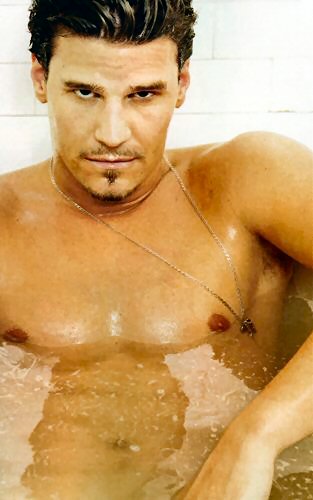
It was very important this be the picture I used

Now, he’s a great actor and totally owning Bones. Now. Then, however, his acting was ... not so good. You can see him trying, really trying, but playing Angel was his first major role and his inexperience shows. It makes for some clunky, awkward viewing – made somehow all the more obvious by seeing how good he is now. It’s weird. It’s also personally weird for me, because as a teen watching Buffy for the first time way back in the 90s, I had the biggest crush on Angel. Now, none of my Angel-love remains (it’s all Booth, baby) so it’s kind of weird watching the Buffy/Angel thing develop when I now have the maturity to look back and see just how melodramatic Buffy was being. It’s real teen stuff, sure, and it really resonated with my teenage self – just not so much anymore.

It is vital we reconsider David Boreanaz at this juncture

On to ‘Out of Mind, Out of Sight’: it’s a neat concept, a good analogy for how teens can feel overlooked, invisible. I’m okay with this episode right up until the final scene, where Marcy has been taken to an FBI-run school. For invisible kids.

Now, I can buy that kids turn invisible in Sunnydale: it’s on a Hellmouth, weird crap like this happens all the time, the Mayor and the police are in on the secret and make efforts to cover it up...I can buy it. However, the idea of this being a nationwide problem is a bridge too far for me. How is this not national news? Even if the government cover it up, why aren’t people writing conspiracy theories about this cover-up? How do the FBI even know who has turned up to class?! The supernatural-things-happening-outside-Sunnydale bit could even work if, say, the writers had dropped in something about this being a school in New York state that was run by a professor who was used to kids with special abilities. Young people who are gifted. If you see what I mean. But no: no, this episode just straight up wants us to be okay with the fact that the FBI run a school for teens that have literally turned invisible – all because Buffy can’t kill humans (much like Batman, really) so there needs to be a plot contrivance to get rid of Marcy without making Buffy into a villain. It just does not work for me.

Also in ‘The Pack’ Willow starts watching a film about hyenas. There are hyena noises on the soundtrack. Midway through the scene, the film she’s watching changes to images of African wild dogs. Wild dogs are not hyenas. This is problematic to me.


Lastly, The Anointed. *sigh* He is just...awful. I get that it's meant to be, "oooh, child-vampire, scary" but he's no Claudia. I just find The Anointed whingey and irritating. Total waste of screen time.


The Ugly:
There are also some real big honking terrible things in this series. Firstly, Alyson Hannigan wasn’t the original casting for Willow. In the unaired pilot it was Riff Regan, who was, shall we say, a plus-sized Willow. So in developing the show from pilot to airing, the decision was made to drop the fat chick and replace her with slim-line Alyson. Let’s be clear: I adore Alyson Hannigan and think she’s absolutely perfect in the role. What I don’t agree with is the fact that, once Regan was dropped from the cast, there’s not a single character who is more than a size 10**** at most. Yeah, some of the guys get a little less sculpted (and there’s always Jonathan) and Tara seems more like a real human female than a Hollywood Clone – but in Season One, Willow dressing dorky is about as unconventional-television as it gets. Which, considering Joss is all “this is written from a feminist place” and gung-ho about having Slayers of many different body types appear in ‘Chosen’ and in the comic series, is pretty sad.

There’s also another glaring plot issue that Boyfriend highlighted to me, that I felt really belonged in ‘Ugly’ rather than ‘Bad’ for soon-to-be-obvious reasons: In ‘The Pack’ Xander and a gang of four never-seen-again bullies get possessed by hyena spirits. Together, this gang go around being general dicks; they then progress to eating the school mascot, an adorable piglet. Buffy manages to trap hyena-Xander after this point, but the rest of the group eat Principal Flutie. As Xander reveals to Giles at the end of this episode, he remembers everything he did whilst hyena-possessed. In Season Three, ‘The Prom’, another classmate makes a reference to “hyena people” and everyone laughs, so it’s obvious Xander isn’t the only one to remember this happening.

So let’s be clear. We have four teenagers who remember tearing a man apart with their hands and teeth and eating him raw. And we have five kids who remember doing the same to a pig.

And no one has any apparent lasting psychological trauma from this.

In fact this whole incident is pretty much glossed over; Willow and Buffy occasionally tease Xander about it for the rest of the show’s existence, and Xander makes the odd joke about it. But the whole visceral experience of ripping porcine flesh with his nails and teeth and devouring the meat hot, raw and twitching? Never spoken of again. Leaving aside Xander’s hyena-driven activities, what about the other four who cannibalised a man?! The school needs a new principal so it’s not like they can just forget about it – how the hell do they sleep at night? You’d think they’d at least get counselling or something.

This is also the episode where Buffy deals with the bad guy by throwing him over her shoulder...into the pen with the demon-hyenas, who eat him. Admittedly Buffy does try to rescue him, but she doesn’t seem especially bothered by the fact she fails to save him and instead has to watch him get torn limb-from-limb and eaten.

So that’s Season One, folks! Next time I tackle just how devastatingly attractive Spike is, how Giles becomes the best person ever, and why Oz is awesome.


*We discuss Batman and watch Buffy. My idea of romance, folks.

** Which makes Buffy 15 years old. FIFTEEN YEARS. Jesus. There are teenagers out there who weren’t even born when Buffy first hit TV screens. I wasn’t kidding about that “long time ago” stuff.

***Extras In Need Of A Line: People who, for obvious budgetary reasons, haven’t been granted a speaking part even when the role they’re fulfilling so desperately calls for dialogue to make this a realistic human interaction.

****Size 10 in UK terms: that’s a 6 for my American audience.